


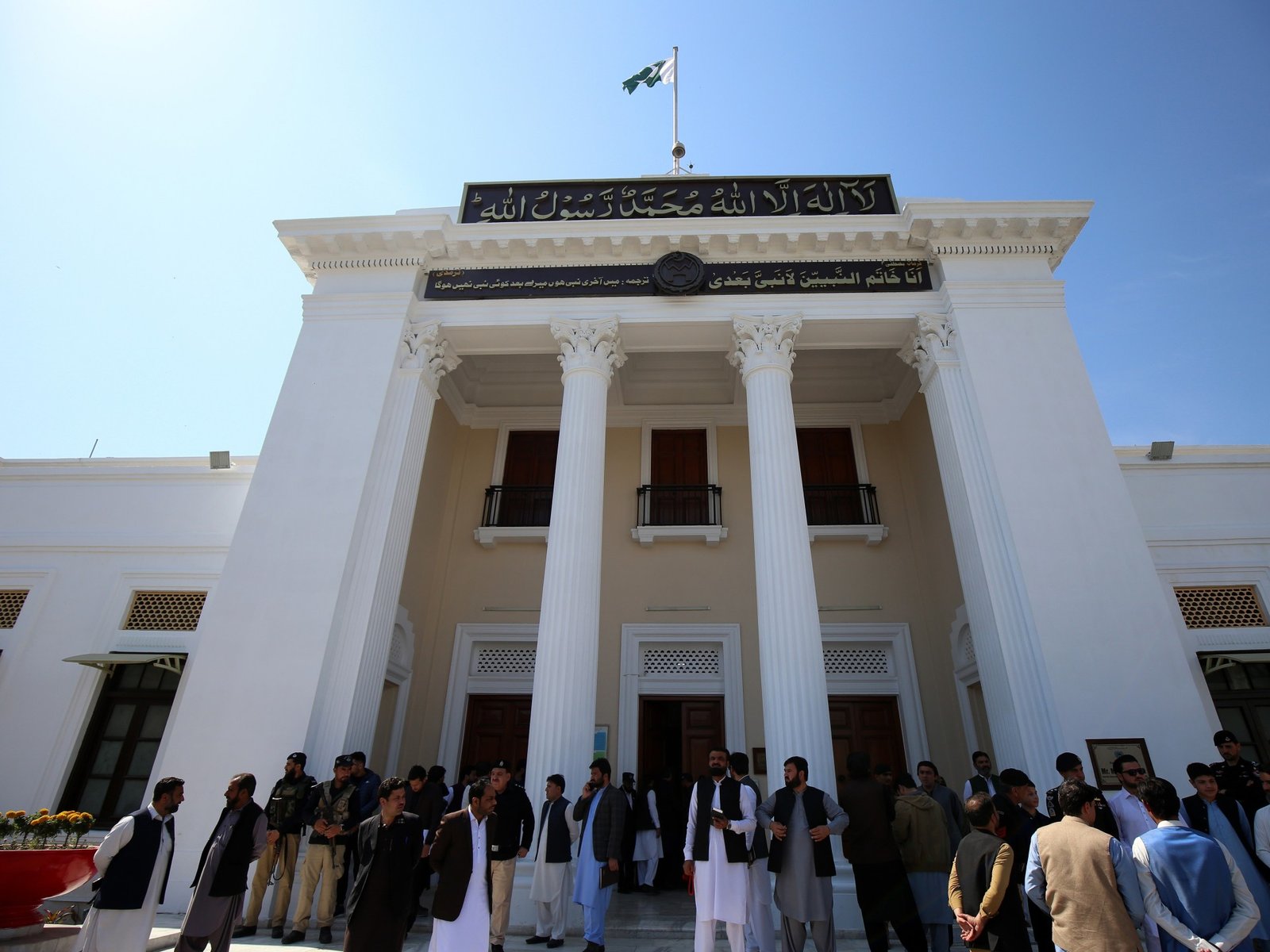

For decades, the Supreme Court of Pakistan stood as the final arbiter of justice and the ultimate custodian of the Constitution. From its marble-clad seat in Islamabad, it issued landmark rulings that protected citizens from retroactive taxation, condemned police torture, and even attempted to put timelines on military dictatorships. However, a seismic shift occurred in November 2025. The passage of the 27th Constitutional Amendment has triggered what international legal bodies are calling a “structural assault” on judicial independence, fundamentally altering the Court’s jurisdiction, composition, and very identity.
A Pillar of the State (1956-2025)
Established in 1956 as the successor to the Federal Court, the Supreme Court was constitutionally designed as the highest judicial forum and the final court of appeal . Its judgments were binding on all other courts, and both executive and judicial authorities were constitutionally bound to act in aid of the Court . The 1973 Constitution prescribed in detail its powers, including exclusive original jurisdiction to settle intergovernmental disputes, appellate jurisdiction over High Court decisions, and advisory jurisdiction to render opinions to the President .
Historically, the Court served as a delicate check on power. Even during periods of martial law, it maintained institutional integrity through rulings on the “doctrine of necessity” and corruption cases against sitting prime ministers . Until very recently, the Court demonstrated its commitment to legal certainty and human rights. In September 2025, a bench led by Justice Ayesha A. Malik delivered a powerful judgment prohibiting the retrospective application of tax laws, declaring that the “legal goalposts cannot be moved after the game has been played” . Weeks later, in a verdict against police torture, the Court declared the right to life the “highest human right,” citing Articles 10 and 14 of the Constitution to condemn extrajudicial killings .
Simultaneously, the institution was undergoing a quiet technological revolution. Under a Judicial Reform Action Plan launched in late 2024, the Court reversed a decade of rising case pendency, reducing the backlog from over 60,000 cases to 56,169 by October 2025 through digital filing and online case tracking .
The 27th Amendment: Stripping the Crown Jewels
This era of expansion came to an abrupt halt in November 2025. The PML-N-led ruling coalition passed the 27th Constitutional Amendment in less than a week, enacting changes that the International Bar Association’s Human Rights Institute (IBAHRI) describes as a “comprehensive legislative strategy designed to subordinate the judiciary” .
1. The Creation of the Federal Constitutional Court (FCC)
The most radical structural change is the creation of a permanent Federal Constitutional Court under a newly inserted Part VII of the Constitution . This new court, with its own Chief Justice and equal representation from all provinces, has been granted exclusive jurisdiction over constitutional interpretation and disputes between the federation and provinces .
- Impact: This effectively strips the Supreme Court of its most potent power—original jurisdiction over constitutional matters. The Supreme Court has been relegated to an appellate body, a “pawn of the executive” according to IBAHRI co-chair Mark Stephens .
2. Judicial Appointments and Coercive Transfers
The amendment empowers the President to transfer High Court judges on the proposal of the Judicial Commission of Pakistan (JCP) without requiring the judge’s consent . Judges who refuse a transfer now face compulsory disciplinary proceedings. Concurrently, the Judicial Commission and Supreme Judicial Council have been reconstituted with expanded membership, including the Chief Justice of the FCC and parliamentary nominees, diluting the previously judiciary-dominant composition .
3. Benches and Suo Motu Power
The Supreme Court (Practice and Procedure) Committee—a three-member body including the Chief Justice—now holds exclusive authority to constitute benches . Furthermore, the suo motu powers of the Supreme Court under Article 184(3) have been effectively transferred to the new Federal Constitutional Court .
4. Lifetime Immunity
Perhaps the most controversial element, the amendment amends Article 248 to confer lifetime immunity from criminal and civil proceedings for the President and individuals holding the titles of field marshal, admiral of the fleet, and marshal of the air force . Baroness Helena Kennedy KC of the IBAHRI stated that this “mocks accountability” and undermines the UN Basic Principles on the Independence of the Judiciary .
Reaction and Reconstitution
Rather than resisting the new framework, the Supreme Court administration swiftly moved to implement it. On 18 November 2025, the Court announced the reconstitution of the Supreme Judicial Council, the Judicial Commission, and the Practice and Procedure Committee to align with the 27th Amendment .
This compliance was met with fierce internal resistance. Justice Mansoor Ali Shah, the second most senior judge of the Supreme Court, resigned, denouncing the amendment as a “political device to weaken and control the judiciary” . Justice Athar Minallah also resigned, calling the changes a “grave assault on the Constitution” . Lahore High Court judge Shams Mehmood Mirza followed suit days later .
Conclusion: The End of an Era?
The Supreme Court of Pakistan finds itself at a precipice. For nearly 70 years, it navigated the turbulent waters of military coups and civilian governments, often emerging as the sole institution capable of upholding constitutional supremacy. The reforms of 2025, however, are not a suspension of the Constitution but an amendment to it. The Federal Constitutional Court now sits alongside—and in some respects above—the historic apex court.